Events are expensive, visible and high‑stakes. But in complex B2B environments, most of the commercial value is either created or lost in the weeks after the event, not on the day itself.
Too often, “event day” is treated as the finish line. The booth is packed down, the keynote is done, the feedback is positive…and the follow‑up is reduced to a “thanks for coming” email and a few ad hoc sales calls. All that hard‑won energy melts away.
When strategy, content, communications, internal alignment and data work together, that same event can become a deliberate engine for trackable pipeline movement – turning event interactions into meetings, opportunities and revenue.
Why most B2B events lose momentum after the day
B2B and corporate events don’t happen in simple environments. You’re dealing with:
- Multiple stakeholders and long sales cycles
- Complex offerings with layers of nuance
- Events that are often seen as one‑off “moments” or brand plays
In that context, it’s easy for post‑event efforts to fall short. Common patterns we see include:
- No clear commercial objectives defined up front – success is “a good vibe” rather than specific pipeline outcomes.
- Fragmented data capture on the day – spreadsheets, business cards, ad hoc notes that never quite make it into the system.
- Generic follow‑ups that don’t recognise key differences like:
- Attendees vs no‑shows
- Existing customers vs net‑new prospects
- Priority accounts vs the broader audience
- Weak connection between event engagement and CRM or sales workflows – so even warm signals are hard to act on.
This is where planning tools like a B2B Event Planning Checklist can help – by forcing clarity on purpose, data capture and ownership before anyone walks into the room.
The event as a journey: before, during and after
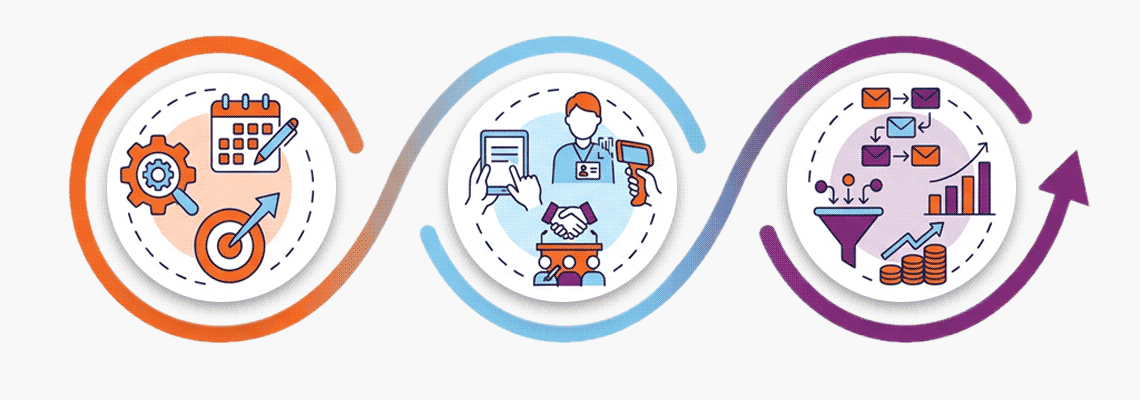
The most successful teams treat events as a joined‑up journey, not an isolated campaign. A simple “before / during / after” view helps:
- Before – define commercial success, align stakeholders, and design sessions and content with follow‑up in mind.
- During – capture meaningful signals, not just attendance; make it easy to log interest areas, buying stage and key conversations.
- After – treat the weeks following the event as the primary window to convert momentum into pipeline.
With the right foundations in place before and during, the “after” phase becomes where the real work – and value – sits.
Designing your post‑event pipeline strategy
Most teams plan their event agenda in detail. Far fewer plan their post‑event pipeline strategy with the same discipline.
A simple place to start is segmentation.
Segment first, then follow up
Instead of one blanket follow‑up, define a few clear segments, such as:
- Engaged attendees – people who visited your stand, asked questions or joined key sessions
- Passive attendees – registered and attended but with lighter interaction
- No‑shows – registered but didn’t attend
- Priority accounts – strategic or high‑value organisations, whether or not they attended
For each segment, get specific:
- What’s the desired commercial outcome? (e.g. discovery call, workshop, trial, additional stakeholders engaged)
- Who owns the follow‑up – marketing, sales, or a shared sequence?
- Over what time horizon – the next two weeks, next quarter, or as part of a longer account play?
This immediately lifts your follow‑up from “one‑size‑fits‑all” to something more relevant and commercially grounded.
Set measurable objectives
From there, define a handful of metrics that matter. For example:
- X% of engaged attendees booked into a follow‑up conversation within 14 days
- Y new opportunities created in your CRM within 30 days
- Z existing opportunities moved at least one stage during the quarter
Connecting these targets to your CRM and marketing automation gives you both a feedback loop and a story you can take back to stakeholders.
A simple post‑event nurture framework
With segments and objectives in place, you can build a layered follow‑up framework that combines content, channels and sales activity.
T+1 day
- Personalised “thank you” or “sorry we missed you” emails, tailored by segment
- Immediate access to promised resources: slides, a recap page, key frameworks
T+3–5 days
- Engaged: Deeper content and an invitation to continue.
- Passive: Recap and a “choose your interest” CTA.
- No‑shows: “Here’s what you missed” with a light ask.
T+2–4 weeks
- Case studies, ROI stories or tools aligned with sessions attended
- Coordinated sales outreach referencing specific event interactions
T+1–3 months
- Check‑ins tied to broader campaign themes or product milestones
- More targeted account‑based plays for priority accounts
The goal isn’t to flood inboxes; it’s to make the event feel like the start of an ongoing, relevant conversation.
Turn interactions into usable data
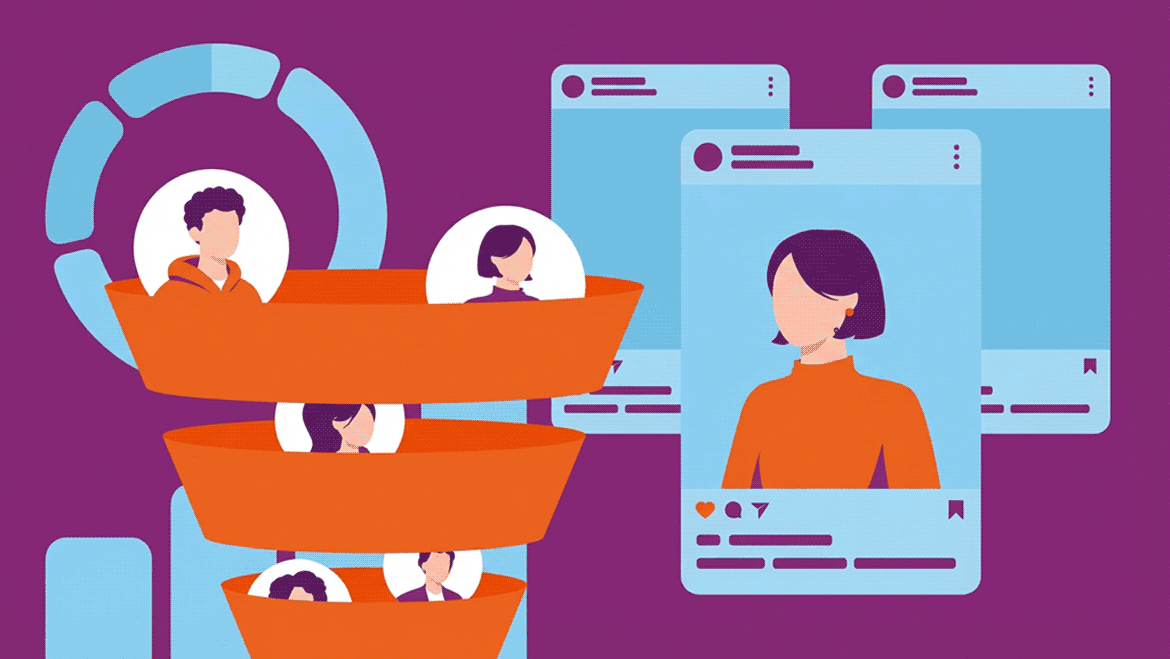
None of this works without structured data sitting underneath it.
Building simple but consistent conventions into your event planning makes a big difference:
- Standard fields in your CRM to capture event context
- Tags for session attendance, topics of interest, buying stage and role
- Agreed processes for how notes and leads make their way from the floor into your systems
From there, you can translate engagement into practical triggers:
- Multiple content views or high‑intent actions prompt an SDR call
- Signals of urgency or budget in conversations trigger more direct follow‑up paths
- Priority accounts get a shared review between marketing and sales to agree next steps
This is also where internal alignment pays off – when everyone shares a clear picture of what happened, who owns what, and how success will be measured.
Measuring and communicating commercial impact
If events are going to keep earning their place in the plan, teams need to move beyond “great feedback” as the outcome.
A simple measurement view might include:
- Meetings booked
- Opportunities created
- Opportunities progressed
- Revenue or pipeline attributed or influenced
Alongside these, leading indicators like content engagement and new stakeholders engaged help you understand whether you’re building momentum in the right places.
Presenting this back to executives as a concise story – tied to original objectives, investment and recommended next steps – helps reposition events as a commercial lever, not just a cost centre.
“
Events are only as effective as the strategy, content, communications, merchandise and follow‑through behind them.
”
How The Walk helps turn event days into deal days
At The Walk, we help teams:
- Design the full event journey – before, during and after – with a clear commercial lens
- Build the messaging, content and communications flows that make follow‑up natural and valuable
- Operationalise data capture, nurture frameworks and sales enablement so your teams can act quickly and consistently
If you’re ready for your next event to generate more than just good feedback, explore our Events marketing services…and equip your team with our B2B Event Planning Checklist to bring more structure and commercial focus to every stage.