We hear a lot from businesses that feel burned by agencies that focus more on static checklists rather than outcome-driven workflows. You invest in a campaign, a rebrand, new content or a website refresh. But somewhere between the brief and the invoice, the value gets lost. The checklist of deliverables are handed over, but it’s not what you expected for the investment, and the results don’t follow. Or worse, you find yourself wondering what you paid for at all.
It’s not always because you had a bad agency doing bad work. More often, it’s because the way the work was produced wasn’t structured smartly enough to produce the results the spend deserved.
What is an agency workflow and why is it important?
“
When that process is clear, repeatable and well-designed, you’ll find you can get better work quicker; which equates to quality at a reasonable cost.
”
An agency workflow is the structured process used to move from understanding a challenge to delivering a solution. It is important because a clear and repeatable process ensures quality work is delivered efficiently and cost effectively. A smart workflow defines how they listen, how they plan, how they execute, and how they learn from results. When an agency workflow is clear, repeatable and well-designed, you’ll find you can get better work quicker; which equates to quality at a reasonable cost.
When businesses start looking for marketing support, the first instinct is usually to compare services. Who does SEO? Who does social? Who can build a website? The assumption is that the value lies in the deliverables themselves.
But here’s the thing: most agencies offer broadly similar services. Whether working in B2B, professional services, property and infrastructure, or healthtech, the difference between a campaign that drives growth and one that just burns budget usually comes down to something less visible. It’s not the work, it’s the workflow.
What does a smart workflow actually look like?
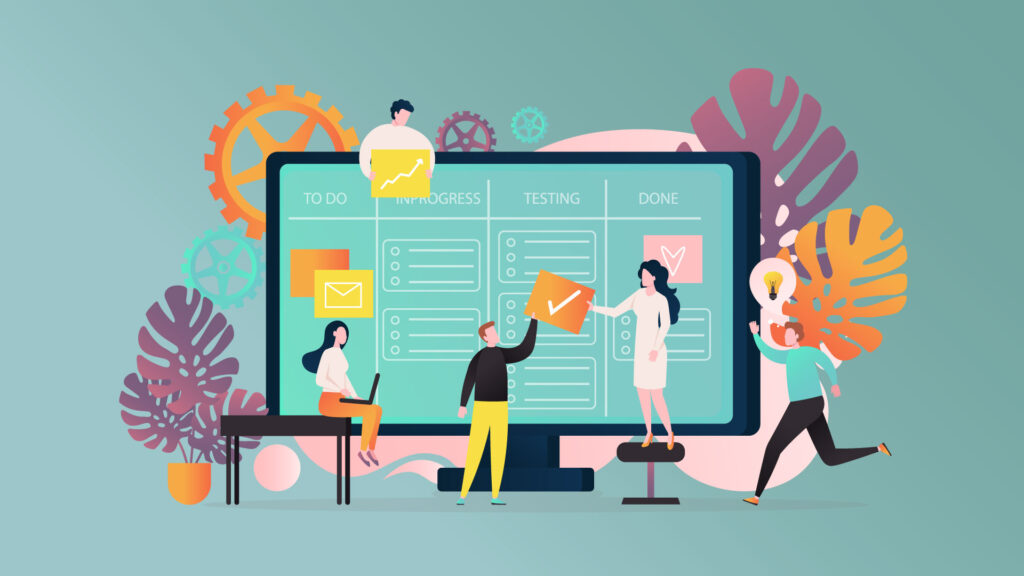
A smart workflow is a structured yet flexible approach with a clear starting point, visible checkpoints for the client, clean internal handovers and a consistent feedback loop for continuous improvement. While these are repeatable, they aren’t rigid templates that are applied to every client the same way. It’s a structured approach that’s flexible enough to adapt to individual situations, but disciplined enough to keep outcomes on track and delivery hyper-efficient, which in turn delivers greater value for clients.
In practice, this means a few things:
There’s a clear starting point.
Before any work begins, there’s a process for understanding where you are, what you’re trying to achieve, and what’s actually going to make a difference. This isn’t a generic questionnaire. It’s a genuine discovery process that shapes everything that follows.
The steps are visible.
You can see what’s happening, what’s coming next, and why. There are no black boxes. If you’re paying for SEO, you know what’s being done each month and how it connects to your goals. If you’re investing in brand strategy, you can see the thinking behind the recommendations, not just the final presentation. This doesn’t just help you manage your expectations. It helps the working relationship between client and agency, because everyone’s clear on what’s next.
Internal handoffs are clean.
In agencies without clear workflows, things get lost between strategy and execution. The strategist has one idea, the designer interprets it differently, and the developer builds something else entirely. Smart workflows build in clear handovers and checkpoints so the intent carries through from start to finish and the overarching goals aren’t left behind in early conversations.
There’s a feedback loop.
The work doesn’t end when the deliverable is handed over. There’s a structured process for reviewing what happened, what worked, and what to adjust. This is where compounding value comes from. Each engagement builds on the last, rather than starting from scratch.
Why does this matter more than a service catalogue?
Workflows matter more than service catalogues because a long list of services can dilute quality. A proven process which links services together in a structured way so they deliver results for a specific situation is what drives real business outcomes.
A long list of disparate services doesn’t guarantee a good outcome and it can reduce value if an agency is overselling disconnected services to bill more hours. What really matters is that the agency has a clear, proven process for turning those services and line items into results that it can apply to your own challenge.
When you’re evaluating marketing agencies, it’s tempting to compare costs and line items to assess value. Agency A offers SEO, PPC and content. For a similar cost, Agency B offers the same, plus social media management. Agency B is better value, right? Not necessarily.

Think of it this way: two restaurants serve beef wellington. One has a chef who added it to the menu because it is a popular trend, but doesn’t have a clear technique, lacks a reliable source for quality beef, and starts with a frozen pastry. The other has a chef who follows a disciplined and proven process for preparing fresh butter pastry, trimming and wet aging the beef which he sources from a local paddock-to-plate provider.
It’s the same thing on the menu, but the outcome is very different. The same principle applies to marketing.
An agency that can transparently show you how the work gets done, step by step, is telling you something important. They’ve done this before. They’ve thought about it. They’ve refined it. They’ve built their operation around delivering consistent quality, not just ticking off deliverables.
Comparison of approaches
| Feature | Outcomes-driven workflow | Service catalogue |
|---|---|---|
| Primary focus | Solving business challenges and achieving growth stages. | Completing a list of specific tactical deliverables. |
| Value | Compounding results through repeatable, refined processes. | Transactional exchange based on hours or line items. |
| Transparency | Visible steps, clean handovers, and clear feedback loops. | Opaque internal processes that can lead to misaligned intent. |
What should you look for when evaluating an agency?
When evaluating an agency, look for transparency in their process, documented and repeatable methods, packages built around specific growth outcomes and a structured review process to capture performance insights.
If you’re in the market for agency support, whether that’s a full strategy engagement or a focused package of services, here are some questions worth asking:
Can they show you the process?
A transparent agency will provide a clear step-by-step breakdown of how they operate, from week one through to feedback and revisions.
Do they have repeatable methods?
Reliable agencies use proven, documented workflows to ensure consistent quality and efficiency rather than starting from scratch each time.
Are their packages built around outcomes?
Effective packages focus on your specific growth stage and business goals instead of just offering a generic menu of tactical hours.
Do they learn from each engagement?
The agency should have a structured review process to feed performance insights back into your strategy for compounding value.
How have we built this into our approach?
At The Walk, we have built this into our approach through a growth stage framework: Clarify, Prove and Scale. This ensures engagements are matched to a business’s current needs with documented, repeatable workflows for each stage.
Our framework is designed to eliminate scope creep and misaligned expectations, so that execution and outcomes match with expectations. We’ve been on both sides of that, and we decided to build differently.
Rather than offering a generic menu of services, we match the type of engagement to where you are right now, regardless of industry or segment. It’s an outcomes focused approach that takes into account which growth stage your business is at.

Clarifying
If you’re not sure what’s working or where to focus, we start with clarifying. That means brand foundations, positioning, and strategy work that gives you a clear direction before any execution begins.

Focused execution
If you have a direction but need to prove it works, we move into focused execution. Targeted campaigns, content, SEO, or paid media, all tied to measurable outcomes so you can see what’s delivering.

Scaling
If you’ve found what works and want to do more of it, we help you scale. That’s where ongoing support, retainers, and integrated marketing come in.
Each stage has its own workflow, its own deliverables, and its own way of measuring success. Because the process is documented and repeatable, we can offer it at a fair price without cutting corners.
The bottom line
Marketing doesn’t have to feel like a gamble. When you work with an agency that has clear, structured workflows behind the work, you get transparency, predictability, and better results over time.
The smarter investment isn’t always the bigger one. It’s the investment where you can understand what you’re spending on, why it’s the right approach, and the impact it’s having for your business.
While we’re based in Melbourne and the Sunshine Coast, we work with clients all over the world. If that sounds like the kind of partnership you’re looking for, take a look at our marketing packages and see how we’ve put this thinking into practice.