
B2B marketing agency
Be the B2B brand buyers already want to work with
B2B growth depends on building relationships, partnerships, and deals over a long period. But before any of that, you need to build trust.
The foundations of that trust are built long before you’ve had your first conversation with a prospective customer, and it comes from clarity, confidence and understanding. The question is, are you missing out on having conversations because your marketing hasn’t effectively put your brand, your services and solutions firmly in the consideration set?
B2B marketing has never been more complex or competitive. Marketing teams more than ever need support and expertise from outside their own organisations to build compelling brand marketing that converts customer needs into enquiry. When you have a complex offering or intricate solution, it can be even more challenging to put the customer first in that narrative.
At The Walk, we use our integrated marketing experience to chart clear paths for B2B buyers, from visibility and awareness through to a sales conversation with an interested buyer who already wants to work with you.
“In B2B, brand works like infrastructure. You don’t notice it when it’s working, but every campaign, proposal and sales conversation depends on it.”
– Jo Edwards, Co-founder and Director, The Walk

Free download
Is your marketing built on solid foundations?
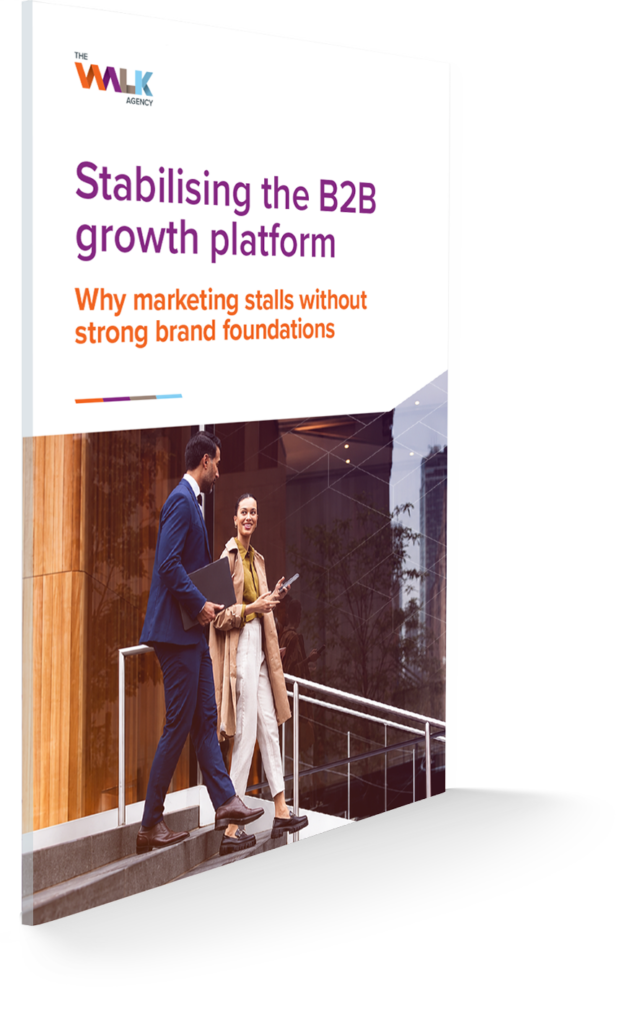
Our research paper, Stabilising the B2B growth platform, explores why marketing stalls without strong brand foundations and what to do about it. Inside, you’ll find the four pillars of strong brand foundations, diagnostic questions to test how stable your own positioning is, and a usable framework for turning fragmented marketing into a coherent growth system.
What is B2B marketing?
B2B (business-to-business) marketing is the practice of promoting products and services to other organisations, rather than to individual consumers. Business purchases are usually larger, riskier and decided by groups, so B2B marketing focuses on building trust and credibility over time instead of prompting a quick sale. Forrester’s State of Business Buying 2026 research found that a typical buying decision now involves 13 internal stakeholders and nine external influencers.1 Effective B2B marketing gives every one of those people the same clear reason to believe in your business, through consistent positioning, messaging and content that helps them make a confident decision.

We partner with the complex, the ambitious, and the masterful.
The high road isn’t for everyone. Our expertise is specifically engineered for organisations where the sales cycle is long, the stakes are high, and the technical story is deep.

Start the conversation
You’re here for a reason, you have a need. How can we help? Let’s discuss your business growth challenge, and where our B2B marketing experience could make the difference for your brand.
The importance of integrated B2B marketing
Integrated B2B marketing unites every channel around a single-minded value proposition. Because buyers meet the same message wherever they encounter your brand, recall builds faster, each channel lifts the performance of the others, and your overall spend goes further. Decision-makers need total confidence in their choices, and we work alongside you in the areas where the climb is toughest.
Our work
Take a look at some of our past work for customers who work in B2B.
-
 Lenovo had the platform. What they were missing was an enterprise-ready template system built to work across every team and every email type. This is how The Walk built it.
Fragments to frameworks: streamlining enterprise outbound email creation
-
 Lenovo's annual CIO Playbook is packed with AI adoption insight, but dense research risks being invisible to time-poor IT leaders. Over consecutive years, we helped Lenovo reframe IDC findings into compelling, character-led animated videos that turned statistics into…
Turning dry data into actionable lead gen
-
 Entering the competitive European football market, PlayHQ needed a clear, credible story to bridge the gap between sophisticated sports tech and new markets. Discover how The Walk decoded this complex market to launch their offering.
Scoring goals in a new market
-
 The Walk developed a 3D anthem video for Lenovo to communicate the value of their Neptune liquid cooling solution to enterprise B2B decision makers. We transformed this complex, obscure technology into a clear, differentiated solution, helping organisations scale…
Bringing Neptune to life in 3D
-
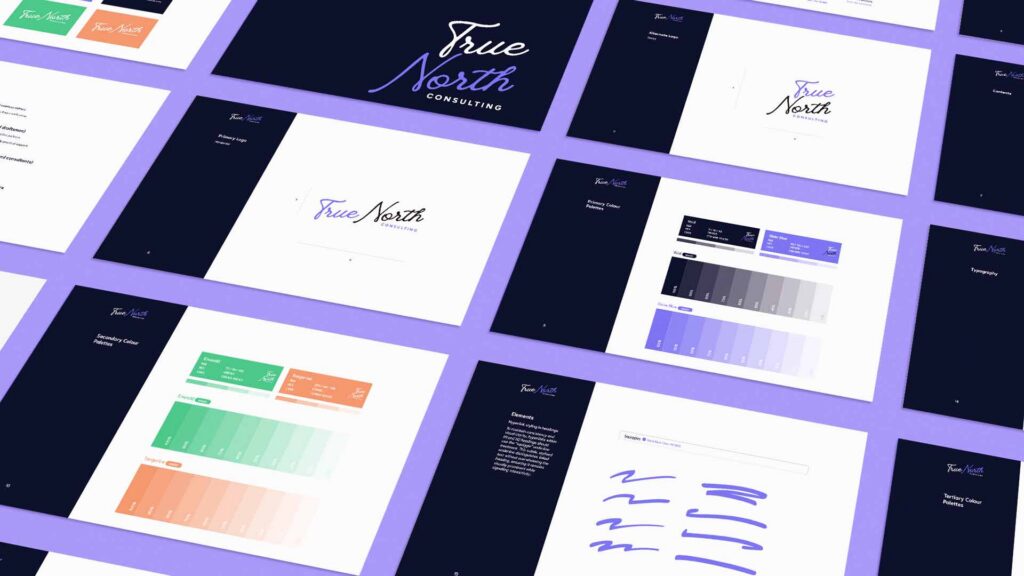 To help True North Consulting grow, The Walk built robust marketing foundations. This included strategic positioning, SEO, and brand asset development, ensuring consistency, building trust, and setting them up to generate a strong lead pipeline.
A clear vision: Building trust and differentiation in Energy Efficiency Consulting
-
 Facing the need to build global trust and address security concerns in the enterprise market, Yealink turned to The Walk to reposition their brand. Discover how we leveraged a strategic partnership with Microsoft to deliver high-quality technical thought…
Building global trust through partnership
Who we have worked with:




Engineering the B2B advantage
As an integrated marketing agency with offices in Melbourne and on the Sunshine Coast, we offer B2B marketing services, from brand strategy to lead generation, for complex brands across Australia, Asia Pacific and the USA.
Aligning scope to the commercial problem
A B2B marketing agency can help when internal teams need specialist capacity, a clearer strategy or a more joined-up route from brand awareness to sales conversations. The scope should follow the business problem.
For example, if a sales team hears the same objection repeatedly, the work might begin with customer and sales interviews, then clarify the message and equip sales with evidence that addresses the concern. If the issue is low-quality enquiries, review targeting and qualification before increasing campaign volume.
A clear division of ownership
The work is most useful when the agency and client agree on who owns each decision. The client brings product knowledge, customer access and commercial priorities.
The agency brings an external view and the skills required to turn those inputs into a programme. Agree the audience, decision-maker, success measure and review cadence before production starts.
What B2B marketing agency services should cover
The right service mix depends on where the buying process is breaking down. A strategy project may be the right start when prospects do not understand the difference between your offer and alternatives. If awareness is strong but sales conversations are scarce, the work may need to focus on demand generation and conversion paths instead.
| Service area | What the agency does | What to review with your team |
|---|---|---|
| Brand and positioning | Clarifies the audience, value proposition and reasons to believe. | Can sales explain the offer consistently? |
| Content and thought leadership | Turns subject-matter expertise into buyer-focused information. | Does the material answer questions raised in live opportunities? |
| Demand generation | Creates campaigns that bring relevant prospects into the buying journey. | Are enquiries reaching the intended accounts and roles? |
| Sales enablement | Builds messaging and materials that support sales conversations. | Do sales teams use the materials at the point they are needed? |
| Measurement | Connects campaign activity with agreed marketing and sales outcomes. | Can the team identify where prospects stall? |
These services should connect rather than operate as separate deliverables. Positioning informs campaign messages; campaign responses help refine what sales needs; CRM reporting shows whether the activity is creating qualified opportunities. A clear brief can start with one priority, such as improving the quality of enquiries, then define any supporting work needed to address it.
How to choose a B2B marketing agency
Assess fit by looking at the agency’s approach to your buying process, not just its list of services. Ask how the team would learn your category and test its understanding of your audience.
A useful first conversation should lead to questions about your sales cycle, the people involved in a decision and the evidence buyers need before speaking with sales.
Need help scoping the engagement?
A short, defined initial engagement helps both sides test fit before broadening scope.
01. Set the business problem
Write down the issue you want to address, such as unclear positioning or a gap between marketing enquiries and accepted sales opportunities.
02. Check relevant experience
Ask for examples that resemble your sales complexity or audience. Discuss the work and its context, not just the final creative output.
03. Clarify the working model
Confirm who leads strategy, who produces the work and which client inputs are required. Agree how changes in scope will be handled.
04. Agree on measurement
Identify a baseline and the indicators you will review. For a long sales cycle, early indicators can show whether the programme is reaching the intended audience, while pipeline outcomes take longer to assess.
05. Review the proposal
Make sure activities connect to the stated problem. If the plan recommends more channels but does not explain the audience or intended next step, ask for that reasoning before committing.
For an Australian organisation, confirm that the team can support the markets and time zones involved, and that its approach can account for local buyer expectations.

The four parts of great B2B marketing
1
Creating awareness to move beyond brand recognition
In B2B marketing, credibility matters more than reach. Buyers use brand reputation as a benchmark before they ever make contact, so awareness needs to be built on a clear, defensible position rather than visibility alone. The brands that stand out are the ones buyers can describe in a single sentence, and that description stays the same wherever they encounter the brand.
2
Educating prospective customers with expert insights
B2B buyers look for partners who understand their industry as well as they do, and most of that judgement happens before the first call. Educational content, such as whitepapers, case studies and technical deep-dives, shows that expertise in action. The most effective education also speaks to the different concerns inside a buying group, from cost exposure and implementation risk to long-term strategic value.
3
Learning the human science of recall
With B2B sales cycles lasting months or even years, consistency is a brand’s greatest asset. Buyers remember businesses that tell the same story every time they meet them, across campaigns, websites, proposals and sales conversations. Distinctive creative helps complex messages stick, but repetition of one clear narrative is what keeps a brand front of mind. That’s where an integrated agency like The Walk pays off: with one team across strategy, creative and media, every channel tells the same story and your budget works harder.
4
Orchestrating nurture across the long-term funnel
In B2B, a lead isn’t a one-time event, it’s a relationship in progress. Effective nurture keeps that relationship moving with timely, relevant communication that reminds, educates and checks in when prospects need it most. Marketing automation makes this possible at scale, but it works best when marketing and sales agree on what a qualified lead looks like, and when a real person should step in.
Ready to improve your brand so it’s starting the right conversations?
Use our partnership to make your B2B marketing more effective. Whether it’s a strategic reset, a brand positioning exercise, or a tactical launch, our experience could be the difference that gets you in the room with your ideal customer.
Drop us a line or fill out the form below. No automated spam, just a conversation with a real human who understands the B2B marketing landscape and is ready to help you achieve your growth goals. Read our Privacy Policy here.
"*" indicates required fields
Latest perspectives
Take a look at some of our B2B related articles.






B2B marketing FAQs
Have questions about B2B marketing? Find answers to the questions we’re asked most often, or get in touch to talk through your own.
What does B2B marketing involve?
B2B marketing is how businesses attract, persuade and retain other businesses as customers. It covers everything from brand positioning and thought leadership to lead generation, account-based marketing, events, email nurture and sales enablement. Typical examples include a software company selling to enterprise IT teams, an engineering firm pitching for infrastructure projects, or a professional services firm building relationships with senior executives. What these have in common is a complex, considered purchase. Several people are involved, the stakes are high and the buying process can take months. That’s why B2B marketing relies so heavily on credibility. Rather than trying to win a single moment of attention, it builds a reputation that buyers can trust long before they’re ready to talk, then supports them with the right information at each stage of their decision.
What makes B2B marketing different from B2C?
The biggest difference is who’s buying and how. B2C marketing usually speaks to one person making a relatively quick, personal decision, so it often leans on emotion, convenience and impulse. B2B marketing speaks to a buying group making a considered decision on behalf of an organisation, where the purchase may be expensive, hard to reverse and closely scrutinised. That changes almost everything. B2B sales cycles are longer, content needs to address the separate concerns of finance, operations and leadership, and trust has to be earned through expertise and evidence. Emotion still matters in B2B, because buyers want to feel confident and avoid risk to their own reputation, but it sits alongside a strong rational case. B2B marketing also works more closely with sales, as most deals involve real conversations before anything is signed.
What are the most effective B2B marketing strategies?
The most effective B2B marketing strategies start with strong brand foundations. That starts with research, such as customer interviews, input from your sales team and competitor analysis, so you understand how buyers really see you. Before investing in more campaigns, make sure your positioning is clear, your messaging is consistent and your leadership team agrees on which sectors and services to prioritise. As our research on B2B brand foundations shows, amplifying an unclear message simply spreads the confusion. From there, the strategies that consistently perform include thought leadership that shares genuine insight, account-based marketing that tailors campaigns to high-value organisations, and content mapped to each stage of the buying journey. The right mix depends on your market, sales cycle and growth goals, so build your strategy around your business, not a template. If you’re not sure where to begin, our marketing packages offer a structured starting point.
How do you generate leads in B2B marketing?
B2B lead generation works best when it focuses on quality rather than volume. Start by defining your ideal customer profile and the buying group you need to reach, then give those people a reason to engage, through useful content, thought leadership, webinars, events and targeted LinkedIn campaigns. Make sure your website and expertise are easy to find, both in search engines and in the AI tools buyers now use for research. Once a prospect engages, nurture them with relevant follow-up rather than pushing for a sale too early. Alignment with sales matters here too. Gartner research found that sales organisations that prioritise alignment with marketing are nearly three times more likely to exceed new customer acquisition targets.2 Agreeing on what makes a lead qualified, and when to hand it over, turns more of that interest into real opportunities.
How do you measure B2B marketing ROI?
Measuring B2B marketing ROI means looking beyond impressions, clicks and engagement to the outcomes that drive business growth. The most useful indicators include qualified pipeline created, conversion rates between stages, the speed at which opportunities move through the pipeline, revenue influenced by marketing, and pricing resilience, meaning how well you hold your price against competitors. Because B2B deals involve many touchpoints over a long period, connect your marketing data with your CRM so you can see how campaigns contribute across the whole journey, rather than crediting only the last click. Set a baseline before you start and agree on the metrics with your sales and leadership teams. Some of the value of B2B marketing, such as a stronger reputation, builds over years, so track both short-term pipeline and long-term brand health.