Many professional services firms find marketing challenging, struggling to commit time and resources, and rueing a lack of demonstrable ROI. It’s common to hear of businesses struggling with inconsistent messaging and fragmented campaigns that means marketing needs to work harder than it should, and often suffers from sub-optimal results.
More often than not, the culprit is a lack of strong brand foundations, which makes marketing harder work than it ought to be. Even with a busy calendar of activities, without strong positioning and tactical alignment, there’s friction across channels, it’s harder to build trust with prospective clients, and ultimately this hinders growth.
We examined this challenge in depth in the first article in this series, now let’s dive deeper into how to solve it. In this article, you’ll learn the five pillars of strong brand foundations, i.e., the practical, strategic steps that turn clarity into conversions.
Ready for marketing that compounds, instead of competing with itself? Let’s get started.
Building solid brand foundations
Strong brand foundations create clarity for prospects, make it easier to create marketing that consistently lands with the right people, for the right reasons. Here’s what we consider to be the most important components for building a strong, differentiated positioning for professional services marketing:
1. Audience research:
Yes, sometimes you just have to trust your gut. But it’s important to also question your assumptions and challenge your perspective if you’re not finding that your marketing is delivering the ROI you’re looking for. A quick survey of a handful of trusted clients, and 3-5 internal stakeholders could deliver an insight about how your firm is perceived that you never considered. For a commercial law firm, it might be important to know whether existing or prospective clients care more about deep rigorously researched and highly technical advice; or if they actually value fast, plain-English guidance more, because delays understanding the legal guidance and their options are slowing their deals? Ask yourself if this is a common theme across your client base. Insights like these can help reshape both positioning and messaging. You can also undertake digital audience research, to try and establish where and how to connect with new clients or open up a new geographical market to your services.
2. Segmentation: Group clients by what they need
Group clients not by industry labels but by what they need. A mid-sized accounting firm might find three segments:
- Time-poor founders who need quick general answers
- Mid-market CEOs in growing businesses who need clear, detailed options to enable strategic decision-making
- Established businesses who only want low risk strategies with predictable reporting and compliance to keep things running smoothly
Each needs the same core service, but with a different focus. By expressing the brand’s value in language that addresses each segment’s particular pain points, trust is built from the outset. This is where positioning comes in.
3. Positioning:
Express how you provide solutions for clients, not just differently, but in a way that matters to them. It’s important that your positioning speaks directly to what your prospective clients value most, whether that’s the technical expertise you bring, experience, or a focus on speed of delivery or consistent growth outcomes. Across professional services marketing, this will vary considerably. But whether you’re a legal firm, sustainability consultant, business advisory or architect, by showing you understand client challenges and can provide specific solutions that align to their goals, you give them the fodder they need to choose you over your competitor. More on this below.
4. Messaging frameworks:
Now, translate your broader positioning into copy aligned to your client segments that your whole team can use. For a financial advisory practice repositioning around “Providing financial clarity for growing businesses,” the messaging framework would contain copy blocks written specifically around turning financial complexity into confident decisions. Sales decks, nurture emails, and LinkedIn posts can then pull from the same playbook, even though the tone may differ to align with the platform or tactic. The frameworks mean that core brand messaging is easy to make consistent across channels, with no improvisation and no drift.

5. Visual brand guidelines:
People are visual by nature, your brand should be too, and an instantly recognisable one will be remembered and chosen more than a generic or visually disparate one. Understanding how people respond to visual stimuli is a highly specialist area, but by way of example, a healthcare clinic that positions itself around “accessible, patient-centred care” might build their brand around light palettes, clearer typography, and imagery that shows human interaction rather than stock medical shots. The visuals now reinforce the promise instead of contradicting it. A corporate-focused consultancy might choose a strong, traditional colour palette and high-power imagery if they were targeting larger more conservative clients. Either way, a consistent visual representation across all your marketing channels – website, social, video, brochures, signage – gives clients comfort and builds trust and brand recognition.
This alignment factor extends across the gamut of activities, ensuring your brand shows up consistently everywhere, with every interaction reinforcing your differentiated positioning and building trust over time.
Brand foundations: A case in point
Let’s take a small Melbourne-based commercial law firm. On the surface, it offers the same services as every other business of its type: contracts, governance, compliance, dispute resolution.
But client and stakeholder interviews reveal its clients aren’t choosing lawyers for technical expertise alone. They value proactive guidance and plain-English advice, because legal complexity slows their business down, and in Melbourne’s fast moving commercial environment, speed matters.
Which means the firm would be better off positioning itself not merely as “experienced multidisciplinary commercial lawyers,” but as: “Legal partners who help growth-focused businesses move faster“. Their messaging shifts from legal jargon to clear, direct language focused on the real problems they solve. Their visuals reflect accessibility and momentum, not formality and tradition.
And when that positioning is delivered consistently across LinkedIn, proposals, webinars, and sales calls, clients start choosing them. Not just because they can do the job, but because they feel this firm gets them.
What makes good brand foundations in professional services?
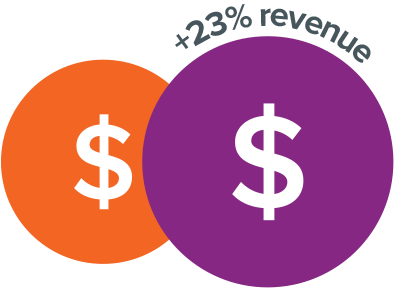
Effective brand foundations blend three things: a clear point of view, meaningful client insight, and a consistent expression across every channel. Studies show that consistent brand presentation can increase revenue by up to 23%. And new research from LinkedIn and Ipsos shows that trust sits at the heart of B2B marketing, with 94% of marketers calling it the key driver of brand success.
In professional services, where your “product” is intangible and its impact isn’t immediately felt, brand trust becomes an even bigger part of the buying decision. This trust is built with a defined strategic stance, an articulation of why your firm exists and what perspective it brings. It’s strengthened by real client insight: the motivations, pressures, and decision-making patterns that shape how your audience evaluates expertise. Firms that invest in client research typically see higher engagement because their messaging speaks to real frustrations and desired outcomes, not assumed ones.
Strong foundations also show up in how precisely a firm communicates with different audience groups. Rather than using generic language, effective brands tailor their message based on client mindset and business maturity, while still sounding consistent in their core message and values.
How strong brand foundations show up
| Element | What it enables |
|---|---|
| Clear strategic point of view | Faster understanding of your value |
| Client-backed insights | Messaging that resonates and converts |
| Relevant audience distinctions | Targeted communication without fragmentation |
| Unified verbal identity | Consistent, trust-building experiences |
| Cohesive visual system | Stronger recognition and perceived credibility |
When these pieces work together, your marketing efforts compound exponentially.
Your brand must evolve with the market
Brand matters even if you’re already established. Markets evolve, client expectations shift, and competitors reframe their offer.
81% of consumer purchasing decisions are influenced by brand trust.
In fact, established firms often experience messaging creep. Over time, language and positioning start drifting away from what the business has become or how it has evolved.
Without recalibration, even strong brands can start to sound inconsistent. Newer firms, on the other hand, need to build alignment early so every marketing dollar reinforces the long-term goal of a cohesive, magnetic brand.
- Brand consistency builds trust – and brand trust matters, with 81% of consumers saying they base purchasing decisions largely on how much they trust the brand they’re buying from.
- It takes up to seven interactions with a brand for the average customer to remember it. Maintaining brand consistency across all channels helps build recognition and customer loyalty.
Partnering with a professional services marketing agency can help ensure both momentum and message stay aligned from the start. At The Walk, we understand this. We embed your brand’s voice and positioning clearly into every touchpoint, so your marketing drives consistent, measurable growth.
The payoff: Marketing that compounds
A Melbourne accounting firm finally decides to pause its “campaign treadmill” and rebuild from the ground up. They clarify their positioning: accounting partners who turn financial complexity into clarity for growing businesses. They refine their tone, rework their visuals, and train teams on the new messaging framework.
Now, their messaging speaks directly to what their audience values, because it’s grounded in real research and clear positioning, and is consistently represented across all their channels. That’s the power of digital marketing for professional services done right: precise, relevant communication that resonates with the right audience.
As a result, the next quarter their LinkedIn ads don’t just attract more clicks. They get the right clicks. Website visitors start spending longer on key pages. Webinars fill up faster. Sales conversations begin from a point of interest, not indifference.
Why? Because every piece of marketing now pulls together in a way that resonates with key audiences.
The same applies in healthcare. Let’s say a Melbourne clinic that once promoted vague “comprehensive care” partnered with a professional services marketing agency in Melbourne to uncover what patients truly valued. Which turned out to be:
- Shorter wait times
- Clearer communication
- Doctors who listened
By reframing its messaging around accessible, patient-centred care and reflecting that across its website, Google Ads, and booking emails, the clinic could facilitate:
- An increase in appointment conversions
- A steady rise in patient referrals
When your brand foundations are solid, your marketing starts to compound. Each campaign builds on the last, reinforcing the same story in the same tone. Your messaging gains clarity with every iteration. Prospects encounter a familiar narrative wherever they meet you, building trust and recognition over time.
“
Building strong brand foundations is now investing in all your marketing rather than just spending more on some of it.
”
Instead of one-off expenses chasing short-term spikes, every campaign now contributes to long-term brand equity. Each touchpoint – a post, an email, a pitch deck – adds a layer of consistency and credibility that’ll compound in value.
And soon, you’re not chasing clients; they’re finding you. That’s what happens when a strong brand, backed by a skilled digital marketing agency for professional services, starts doing the heavy lifting for your business.
At The Walk, we see this transformation often as momentum builds naturally:
- Marketing efficiency improves as teams spend less time reinventing the wheel.
- Client-facing teams tell the same story, reinforcing your credibility.
- Campaign metrics improve because the audience recognises and trusts your message.
How to start building (or rebuilding) your brand foundations
In professional services, competition is fierce. Clients are often choosing between firms that offer nearly identical expertise, so brand clarity and trust become the real differentiators. Here’s how to build strong brand foundations that’ll make your marketing work harder for you.
Start with a brand audit
1. Check three things:
- Positioning: Does your message still fit your market? A Melbourne financial firm might need to emphasize reliability, while a Sunshine Coast construction business leads with local trust.
- Messaging: Do your website, LinkedIn, and sales decks tell the same story? If one says “we simplify” and another says “we are premium,” you are signaling two different brands.
- Service delivery: Does what you deliver align with your promises? A firm claiming “rapid clarity” cannot afford long turnaround times without damaging its brand.
2. Talk to clients and your team
Your clients and team often describe your value more clearly than your marketing does. Ask them: “Why did you choose us?” or “What’s changed since working with us?”
A Queensland healthcare firm might hear: “You make compliance easy, so we can focus on patient care instead of paperwork.” Thus, revealing an emotional hook. Capture the phrases and insights that appear repeatedly. These could form the basis of your new messaging framework.
Ask your staff: “What do we do best?” If sales says “service speed” but management says “strategic advice,” and clients say something different, that’s a brand gap worth closing. Especially because these gaps might reveal exactly where your messaging drifts from reality.

The first step to aligning marketing, sales and customer conversations is simply to start asking the right questions.
3. Align leadership and marketing
Hold a focused workshop to define what truly sets you apart. A SaaS firm, for example, may discover its strength isn’t the tech itself but the local integration support that global competitors can’t match.
Document these three elements:
- Positioning statement: Clearly define what you do, for whom, and why it matters.
- Proof points: Identify two or three concrete facts that back up your claims.
- Tone of voice: Decide how your brand speaks—whether it is confident but human, or specialist but clear.
4. Bring in specialists
Partnering with a strategy-led agency like The Walk helps turn audit insights into action. Our experience across financial services, healthcare, legal, and consulting means we know what resonates in Australian markets. Whether you need digital marketing consulting services for your Sydney-based practice or B2B marketing for your Sunshine Coast office, we can help unify your positioning, messaging, and creative execution into one coherent framework.
5. Keep it alive
Strong brands evolve with the market. Review your positioning and messaging every 18-24 months, or sooner in fast-changing sectors. Track whether prospects understand your message, if engagement is improving, and whether visuals still fit. Update your brand guide and train teams to maintain consistency.
If an environmental consulting firm expands into large-scale infrastructure projects, or a legal practice shifts its focus from corporate to private clients, both would need to revisit their messaging, tone, and visuals. Treat your brand as a living system that adapts with your business.
Play the long game, because that’s where growth happens
When your brand foundations are strong, marketing stops feeling like a grind and starts building momentum. Every campaign reinforces the last and your team moves with clarity instead of chaos.
The firms that focus on alignment today build trust and recognition faster. That clarity and consistency will help them lead tomorrow’s market.
Ready to turn scattered efforts into strategically aligned activities that create lasting impact? Start with a discovery session at The Walk. Because when your brand is clear, your marketing works harder as well as smarter.